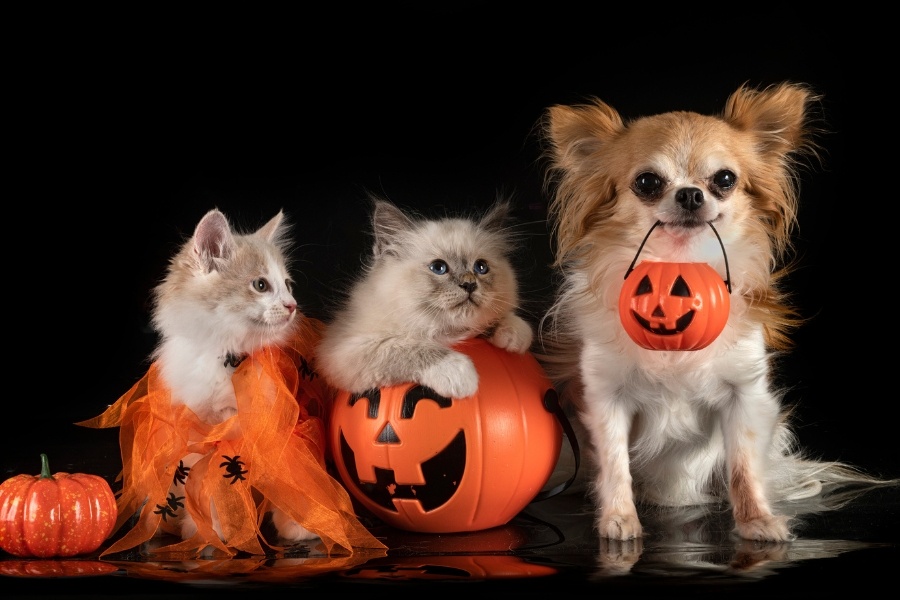
Halloween can be an exciting time for families, with costumes, decorations, candy, and visitors coming to the door. For dogs and cats, however, the extra noise, unfamiliar objects, and tempting treats can create unexpected risks. A few simple precautions can help keep pets safe while everyone enjoys the holiday.
At Crysler Animal Hospital, helping pets stay healthy and comfortable is an important part of supporting local families. Understanding common Halloween hazards can help dog and cat owners recognize potential dangers and make safer choices before the festivities begin.
Whether your pet is curious about decorations or nervous around trick-or-treaters, planning ahead can make Halloween less stressful. Here are seven common mistakes to avoid to help protect your pets throughout the evening.
1. Leaving Halloween Candy Where Pets Can Reach It
Candy bowls may be tempting for pets, especially dogs that like to investigate food left on tables or near the front door. Chocolate can be toxic to both dogs and cats, while sugar-free candy containing xylitol can cause a dangerous drop in blood sugar in dogs. Raisins and some other ingredients can also pose serious risks.
Keep candy, baked goods, and treat bags in closed cupboards or other secure places. Remind children not to share Halloween sweets with pets, even if they seem eager for a taste.
If your pet eats chocolate, sugar-free candy, or another potentially harmful ingredient, contact a veterinarian or pet poison helpline promptly. Do not wait for symptoms to appear or try to make your pet vomit unless a veterinary professional instructs you to do so.
2. Using Decorations That Pets Can Chew or Swallow
Halloween decorations can turn an ordinary room into a tempting playground for curious pets. Fake spiderwebs, ribbons, string, plastic fangs, and small decorative pieces may be chewed or swallowed. Some objects can cause choking or intestinal blockages.
Keep small decorations out of reach, secure electrical cords, and avoid placing breakable items where pets might knock them over. Battery-operated candles are generally a safer choice than open flames, but their batteries still need to be kept away from curious paws and mouths.
Choose decorations with your pet’s habits in mind. If your cat loves batting at dangling objects or your dog tends to chew household items, keep those decorations out of their space.
3. Dressing Pets in Uncomfortable Costumes
A Halloween costume may look adorable, but not every pet enjoys wearing one. Clothing that is too tight or restrictive can interfere with movement, breathing, vision, or normal body language. Loose pieces, dangling ties, and small accessories may also become chewing or choking hazards.
If you dress your pet up, choose a lightweight costume that fits properly and allows normal movement. Introduce it gradually and watch for signs of discomfort, such as freezing, hiding, repeated attempts to remove the outfit, or unusual agitation.
Never force a costume on a distressed pet. A simple festive bandana or no costume at all may be a better option.
4. Letting Pets Rush Toward the Front Door
Frequent doorbell rings and an open front door can make it easy for pets to slip outside. Even a normally calm dog or indoor cat may dart through the doorway when excited or frightened by visitors.
Before trick-or-treating begins, place pets in a quiet, secure room away from the entrance. Provide fresh water, a comfortable resting spot, and familiar bedding or toys. Make sure everyone in the household knows to keep the door closed and avoid letting pets follow visitors outside.
Check that your pet’s collar identification is current and that their microchip information is up to date. These steps can help if your pet does manage to escape.
5. Ignoring Signs of Halloween Stress
Loud noises, unfamiliar people, flashing decorations, and constant activity can overwhelm some pets. Dogs may pace, pant, bark, or try to hide. Cats may crouch, flatten their ears, retreat to secluded areas, or become unusually defensive.
Do not assume your pet will simply get used to the activity. Give them a quiet place to retreat, away from the door and the busiest parts of the home. Keep their usual feeding and resting routines as consistent as possible.
If your pet appears frightened, allow them to settle at their own pace. Avoid pulling them out of hiding or encouraging interactions with visitors when they clearly want space.
6. Sharing Human Treats or Holiday Foods
Candy is not the only food hazard at Halloween. Desserts, rich snacks, and foods containing chocolate, raisins, or certain artificial sweeteners can make pets sick. Wrappers can also be dangerous if swallowed, potentially causing choking or digestive problems.
Keep party food on secure surfaces and clear plates and wrappers away promptly. Offer pets their regular food and treats made specifically for them instead of sharing holiday snacks.
If your pet eats something questionable, save the packaging or ingredient list if possible. This information can help a veterinary professional assess the risk and recommend the next step.
7. Waiting Too Long to Seek Veterinary Advice
It can be difficult to tell whether a pet’s unusual behavior is caused by stress or something more serious. However, signs such as repeated vomiting, difficulty breathing, collapse, seizures, severe weakness, or suspected ingestion of a toxic substance require prompt veterinary attention.
Do not wait for symptoms to worsen if you know your pet has eaten something potentially dangerous. Contact a veterinary professional for guidance, and seek emergency care when advised.
Before Halloween, identify a trusted veterinarian near you so you know where to seek advice if your dog or cat eats something unsafe or begins showing concerning symptoms. Having the clinic’s contact information ready can save time when your pet needs care. Check holiday hours in advance, too.
Help Your Pets Enjoy a Safer Halloween
Halloween does not have to be frightening for your pets. Keeping candy secured, choosing safe decorations, preventing escapes, and providing a quiet retreat can reduce many common holiday risks. Pay attention to your pet’s behavior and respond quickly if something seems wrong.
Crysler Animal Hospital encourages pet owners to make safety part of their Halloween plans. A little preparation can help your dogs and cats stay comfortable while your family enjoys the festivities.
Have questions about your pet’s health or need professional veterinary care? Schedule an appointment to discuss your pet’s health needs and help keep them safe and healthy throughout the year.
Frequently Asked Questions
Q1. What Halloween foods are dangerous for dogs and cats?
Ans: Chocolate, sugar-free candy containing xylitol, raisins, and foods with other harmful ingredients can pose risks. Keep sweets and holiday snacks securely stored, and contact a veterinary professional if your pet eats something potentially toxic.
Q2. How can I keep my indoor cat safe on Halloween?
Ans: Keep your cat in a quiet room away from the front door, secure decorations and cords, and provide familiar bedding, water, and a litter box. Make sure visitors do not accidentally let your cat outside.
Q3. Should I dress my dog or cat in a Halloween costume?
Ans: Only if your pet is comfortable wearing it. Choose a well-fitting costume that does not restrict movement, breathing, or vision, and remove it if your pet shows signs of distress.
Q4. How can I tell if Halloween is stressing my pet?
Ans: Hiding, pacing, excessive panting, trembling, flattened ears, unusual barking, or attempts to escape may indicate stress. Give your pet space in a quiet, secure area and avoid forcing interactions.
Q5. What should I do if my pet swallows a Halloween decoration?
Ans: Contact a veterinarian promptly, especially if the object could be sharp, string-like, or large enough to cause a blockage. Do not pull string from your pet’s mouth or rectum, and do not induce vomiting unless a veterinary professional tells you to.
Q6. Why should I know a veterinarian near you before Halloween?
Ans: Knowing how to reach a veterinary professional before Halloween can help you act quickly if your pet eats something unsafe, gets injured, or develops concerning symptoms. Keep contact information accessible and confirm holiday availability before the festivities begin.