
Finding Answers When Your Dog Needs Them Most
When your dog is not acting like themselves, you want answers fast. Not guesses. Not a wait-and-see approach. Real answers that point toward real solutions. Diagnostic care for dogs is a part of veterinary medicine that makes that possible. It is the process of looking beyond what a physical exam alone can reveal and using the right tools to find out exactly what is going on inside your dog's body.
At Crysler Animal Hospital, we take dog diagnostic care in Independence seriously because we know that accurate information is what leads to better outcomes for your dog.

Why Diagnostics Are the Foundation of Good Veterinary Care
A physical exam tells us a lot. It tells us how your dog looks, feels, and responds, but there is an entire layer of health that cannot be seen from the outside. Organ function, infection markers, internal masses, fluid changes, and bone structure are not visible without the right diagnostic tools. A vet working without diagnostics is essentially trying to solve a puzzle with half the pieces missing.
Diagnostics fill that gap, confirm what the exam suggests, uncover what the exam cannot detect, and provide the specific information we need to make confident treatment decisions. Without them, even the most thorough examination leaves too much to interpretation, and your dog deserves better than that.
Health Screens and Lab Work
Laboratory testing is one of the most informative things we can do for a dog, whether they are sick or just coming in for a routine wellness visit. Blood and urine tell a story that no amount of visual examination can replicate. We use in-house lab equipment that gives us results quickly, so we are not left waiting, and neither are you.
What We Test and Why It Matters
Lab work covers a wide range of information depending on what your dog needs. Here is a look at the core tests we run and what each one reveals.
Complete Blood Count
A complete blood count, or CBC, measures the different types of cells in your dog's blood. Red blood cells carry oxygen throughout the body. White blood cells fight infection and indicate immune system activity. Platelets help blood clot properly. When any of these numbers fall outside the normal range, it signals that something in the body needs attention.
- Red blood cell levels: Low counts indicate anemia, which can result from blood loss, immune system issues, or chronic illness. Elevated counts may point toward dehydration or other conditions.
- White blood cell count: High counts often indicate an active infection, inflammation, or immune response. Certain types of white blood cell elevations also raise concern for blood-related cancers.
- Platelets: Abnormally low platelet counts can explain unexplained bruising or bleeding and require prompt investigation.
Blood Chemistry Panel
CBC examines blood cells, and the chemistry panel evaluates what is dissolved in the blood. It measures how well the organs are functioning and whether key levels are in balance.
- Kidney values: Elevated creatinine and BUN levels can signal reduced kidney function. Catching this early gives us the best opportunity to slow the progression and protect your dog's long-term kidney health.
- Liver enzymes: Elevated liver markers indicate that the liver is under stress, which can stem from infection, toxic exposure, medication effects, or underlying liver disease.
- Blood glucose: High glucose levels can indicate diabetes, while low levels may explain sudden weakness or collapse in a dog.
- Electrolytes: Sodium, potassium, and chloride levels reflect hydration status and can reveal problems with the adrenal glands, digestive tract, or kidneys.
Urinalysis
Urine testing gives us a separate but equally valuable window into your dog's health. It helps evaluate kidney function in greater detail, screen for urinary tract infections, detect early signs of diabetes, and identify crystals or protein that can signal developing problems.
We look at the urine concentration, its pH, any abnormal cells or bacteria, and the presence of proteins or glucose. Combined with blood work, a urinalysis gives us a much fuller picture than either test offers on its own.
Thyroid Testing
Hypothyroidism is one of the most common hormonal conditions in dogs. It occurs when the thyroid gland does not produce enough hormone, and it can cause weight gain, lethargy, hair loss, and skin changes that are easy to mistake for normal aging. A simple blood test measuring thyroid hormone levels gives us a clear answer so we can treat the condition effectively if it is present.
Pre-Anesthetic Bloodwork
Before any procedure requiring anesthesia, we run pre-anesthetic bloodwork to make sure your dog's organs can safely process the medications involved. We primarily assess liver and kidney function, as these systems are responsible for metabolizing anesthetic drugs. Bloodwork findings allow the veterinarian to adjust the anesthetic plan accordingly and implement appropriate monitoring measures before the procedure begins.
Digital Radiology and Ultrasound
Imaging lets us see inside your dog's body without surgery. We use both digital X-rays and ultrasound in our clinic, and each technology offers a distinct view that serves a different diagnostic purpose. Together, they allow us to investigate a wide range of internal concerns with precision and speed.
Digital Radiology
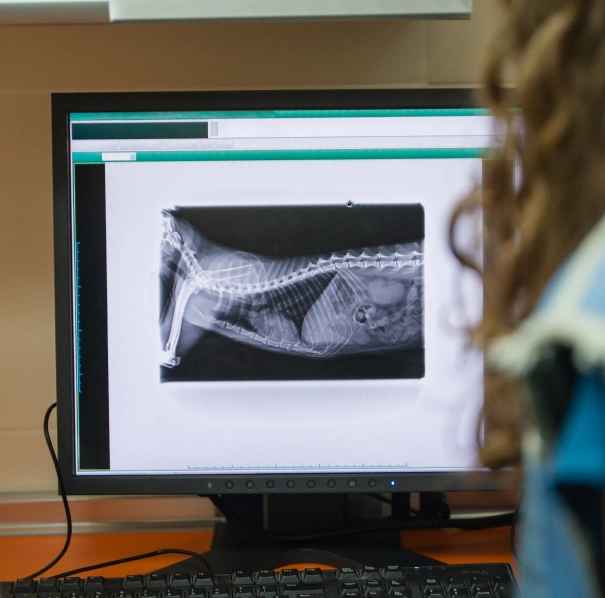
Digital X-rays give us a clear, detailed look at your dog's skeletal structure, chest, and abdomen. The images are captured digitally, which means they are sharper than traditional film X-rays, easier to adjust for contrast and detail, and immediately available for on-screen review.
What Digital X-Rays Reveal
- Bone and joint issues: Fractures, arthritis changes, joint deterioration, and developmental problems like hip dysplasia all show up clearly on X-ray. We use radiographs routinely when dogs are limping, recovering from trauma, or showing signs of joint pain.
- Heart and lung evaluation: Chest X-rays allow us to assess heart size and shape, identify fluid in and around the lungs, and look for signs of pneumonia, tumors, or other respiratory conditions.
- Abdominal organs: We can assess the size and position of the stomach, intestines, liver, spleen, and kidneys. Blockages, abnormal masses, and gas patterns that indicate obstruction are visible on abdominal radiographs.
- Foreign bodies: Dogs are notorious for swallowing things they should not. X-rays help us identify objects that are lodged in the digestive tract and determine whether they are likely to pass on their own or require intervention.
Ultrasound Imaging
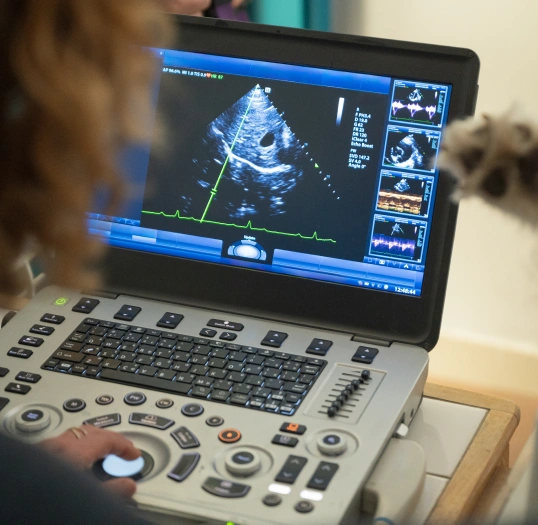
While X-rays are excellent for dense structures like bone, ultrasound excels at evaluating soft tissues and fluid-filled structures. It uses sound waves rather than radiation and provides a real-time moving image, which means we can watch organs function as we examine them.
When We Reach for Ultrasound
- Abdominal organ evaluation: Ultrasound allows us to examine the liver, spleen, kidneys, bladder, and intestinal walls in much greater detail than an X-ray alone. We can measure organ size accurately, assess texture and internal structure, and identify masses or cysts that radiographs might miss.
- Cardiac ultrasound: Also called an echocardiogram. A cardiac ultrasound allows observation of the heart beating in real time. We evaluate the thickness of the heart walls, how well the valves open and close, and whether fluid is accumulating around the heart.
- Guided sampling: When a mass or abnormal area is identified, ultrasound can guide a needle for surgery. Getting a tissue sample accurately and safely is far easier when we can see exactly where we are in real time.
- Pregnancy evaluation: Ultrasound is the safest and most accurate way to confirm pregnancy and assess fetal health in dogs.
Putting It All Together
Lab work and imaging are not used in isolation during diagnostic care for dogs. We use them together to build a complete diagnostic picture. A dog presenting with vomiting, for example, might need blood work to rule out metabolic causes, abdominal X-rays to check for obstruction, and an ultrasound to evaluate the stomach and intestinal walls in detail. Getting all of that information from a single visit means faster answers and faster treatment.
We also use diagnostics as part of regular wellness screening for older dogs. Annual or biannual lab panels for senior dogs allow us to track organ function over time and catch early shifts before they become serious problems. We firmly believe that knowing earlier is always better than knowing later.
We Have the Diagnostics That Your Dog Needs
Something feels off with your dog, and you can tell even if you cannot quite put it into words. Maybe they are eating less, moving more slowly, or just seem different. Those instincts matter, and they are worth investigating properly.
Contact Crysler Animal Hospital in Independence for dog diagnostic care today. Whether you are dealing with a sudden change or chasing a long-standing concern, we will build the right testing plan and walk you through every result in plain language. Our team is here to make sure you never leave with more questions than you came in with.
Frequently Asked Questions
