Safe & Stress-Free Surgical Care
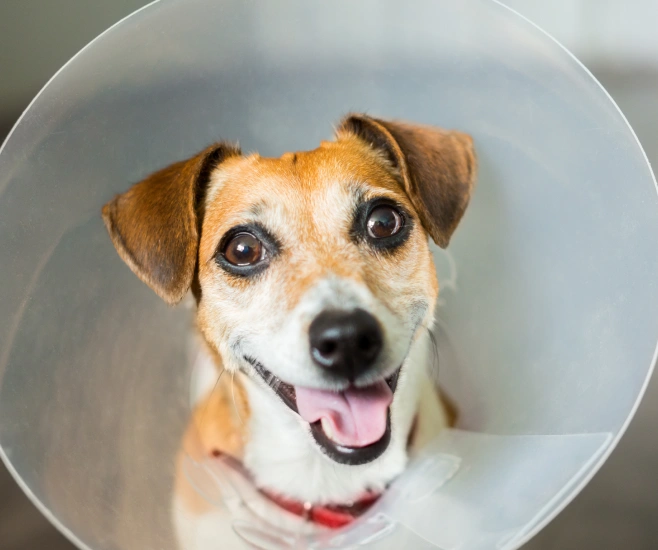
At Crysler Animal Hospital, we understand that surgery can be a stressful process for you and your pet. That’s why we have invested in top-of-the-line surgical technology and do everything we can to make the surgical process as safe and pain-free as possible for your pet. Our veterinarians diligently monitor your pet’s vitals throughout surgery. Following any procedure, we provide a comprehensive pain management plan to make your pet’s recovery as comfortable as possible. Our veterinarians will tailor your pet’s postoperative plan to the source and severity of pain, as well as how your pet responds to medication.

General & Advanced Surgery
Our procedures range from routine surgeries like spaying, neutering, and orthopedics to more advanced surgeries designed to improve your pet’s quality of life, treat or correct major issues, and in some cases even save your pet’s life. Some surgeries are scheduled well in advance, while some are emergency surgeries that must be completed as quickly as possible— such as foreign body removal when your pet swallows something they can’t digest.
Surgical Procedures
- Ovariohysterectomy (Spay)
- Orchiectomy (Neuter)
- Declaw
- Orthopedics
- Fracture Repair
- Cast/Splint Application
- Soft Tissue Surgery
- Exploratory
- Foreign Body Removal
- Organ Biopsy
- Tumor Removal/Histopathology
Spay/Neuter Procedure
Spaying or neutering your pet is, in many cases, one of the most responsible choices that an owner can make on behalf of their pet. Preventing them from impregnating other pets or becoming pregnant themselves is only one of the benefits of this procedure. It can also protect them from a whole host of potential health issues.
Neutering and spaying refer to the same general procedure— removing the reproductive organs in your pet. When performed on a male, it’s known as neutering. When performed on a female, it’s called spaying.
In females, spaying reduces uterine and mammary issues including infection and cancer, and puts an end to regular ‘heat’ cycles which can cause discomfort and behavioral issues. Spaying can also lead to reduced instinct to roam, howl, mark spots with urine, and become aggressive.
In males, the neutering procedure reduces aggression, urine marking, howling, and the urge to roam. It also prevents diseases that are common in unaltered male dogs, including prostate disease and testicular cancer.
Unless you have the specific goal of becoming an accredited breeder and using your dog as a sire or dam (male or female parent for breeding purposes), we highly recommend spaying and neutering your pet.
Laser Surgery
Laser surgery uses a highly focused infrared beam to remove tissue while simultaneously sealing capillaries, lymphatics, and nerve endings. Our veterinarians prefer laser surgery to traditional scalpel surgery because it minimizes blood loss, risk of infection, and even post-operative pain. Almost any soft-tissue surgery can be performed with lasers.
