
Getting Real Answers for Your Cat’s Health
Cats are not easy to care for since they hide discomfort, mask illness, and carry on with their routines even when something is genuinely wrong. By the time a cat shows visible signs of being unwell, the underlying issue has often been developing quietly for weeks or longer. At Crysler Animal Hospital, we offer cat diagnostic care in Independence built around the tools and testing your cat needs to get real answers, not guesses. Diagnostic care for cats is what breaks through that silence. It allows the veterinarian to look beyond the surface and see what is actually happening inside your cat's body.

The Problem with Waiting on Cats
Cats are wired to appear fine. It is a survival instinct that goes back generations, and while it makes them fascinating animals, it also makes them genuinely difficult to read as pet owners. A cat with early kidney disease still eats. A cat with a developing mass still grooms and sleeps in their favorite spot. A cat with a thyroid condition slowly changes in ways that are easy to chalk up to getting older.
Routine diagnostics and preventive care for cats work together to cut through this. When we run lab work regularly and use imaging to investigate concerns, we catch problems while they are still manageable. The window for effective treatment is almost always wider at the beginning of a condition than it is once symptoms become hard to ignore. Waiting costs time, and in veterinary medicine, time almost always matters.
Health Screens and Lab Work
Laboratory testing is one of the most powerful tools available in feline medicine. Blood and urine carry detailed information about how your cat's organs are functioning, what infections or imbalances may be present, and whether anything inside the body has shifted from its normal range. We use in-house laboratory equipment so that results are available quickly and we can begin working toward a plan during the same visit.
Blood Work and What It Tells Us
We run different types of blood panels depending on your cat's age, health status, and what we are investigating. Here is a breakdown of the main tests we use and what each one uncovers.
Complete Blood Count
A complete blood count evaluates the three major types of cells circulating in your cat's blood. Each one tells a different part of the story.
- Red blood cells: Low counts indicate anemia, which can result from chronic illness, blood loss, nutritional deficiency, or immune-mediated conditions. Elevated counts may signal dehydration or a bone marrow issue.
- White blood cells: Elevated levels suggest active infection, inflammation, or immune activation. Certain patterns in white blood cell counts raise concern for leukemia or other blood cancers, which are unfortunately more common in cats than many people realize.
- Platelets: Abnormally low platelets can cause unexplained bruising or prolonged bleeding. Elevated counts can be seen in inflammatory conditions or following injury.
Blood Chemistry Panel
Where the CBC looks at cells, the chemistry panel measures what is dissolved in the blood. It reflects the working condition of your cat's major organs and is one of the most informative tests we run.
- Kidney markers: Creatinine, BUN, and SDMA levels help us assess kidney filtration function. Cats are highly prone to chronic kidney disease, and catching early changes allows us to slow its progression through dietary and medical management significantly.
- Liver enzymes: Elevated liver values indicate the liver is under stress, whether from infection, fat accumulation, toxic exposure, or underlying liver disease. Cats are particularly vulnerable to a condition called hepatic lipidosis, and liver panels help us identify when the liver needs attention.
- Blood glucose: Feline diabetes is more common than most people expect. Elevated blood glucose, especially combined with symptoms like increased thirst and urination, points strongly toward a diabetes diagnosis.
- Total protein and albumin: These values reflect nutritional status and the body's ability to absorb nutrients. Low protein levels can indicate intestinal disease, liver dysfunction, or protein loss through the kidneys.
Urinalysis
Urine testing gives us a separate but equally valuable view of your cat's health. We evaluate urine concentration, pH, the presence of protein, glucose, red or white blood cells, crystals, and bacteria. Dilute urine is one of the earliest signs of failing kidney function in cats, often appearing before blood values show significant change. A urinalysis also helps us identify urinary tract infections and bladder conditions that cause some cats to strain or urinate outside the litter box.
Thyroid Testing
Hyperthyroidism is one of the most common conditions we diagnose in middle-aged and older cats. The thyroid gland becomes overactive, driving up metabolism and causing weight loss despite a ravenous appetite, increased activity or restlessness, and sometimes vomiting or loose stools. A simple blood test measuring total T4 levels gives us a clear answer and allows us to move directly into treatment if hyperthyroidism is confirmed.
Pre-Anesthetic Bloodwork
Before any procedure requiring anesthesia, we run pre-anesthetic bloodwork as a standard part of our protocol. We focus on kidney and liver function since these organs process anesthetic medications. Abnormal values allow the veterinarian to adjust the anesthetic plan, add additional monitoring measures, or delay the procedure if needed. Pre-anesthetic testing protects your cat by ensuring we go into every procedure with a full picture of how their body is functioning.
Digital Radiology and Ultrasound
Imaging extends what we can see well beyond the reach of a physical exam. We use both digital X-rays and ultrasound at our clinic, and each technology reveals information that the other cannot. Together, they provide a comprehensive internal view of your cat without the need for exploratory surgery.
Digital Radiology
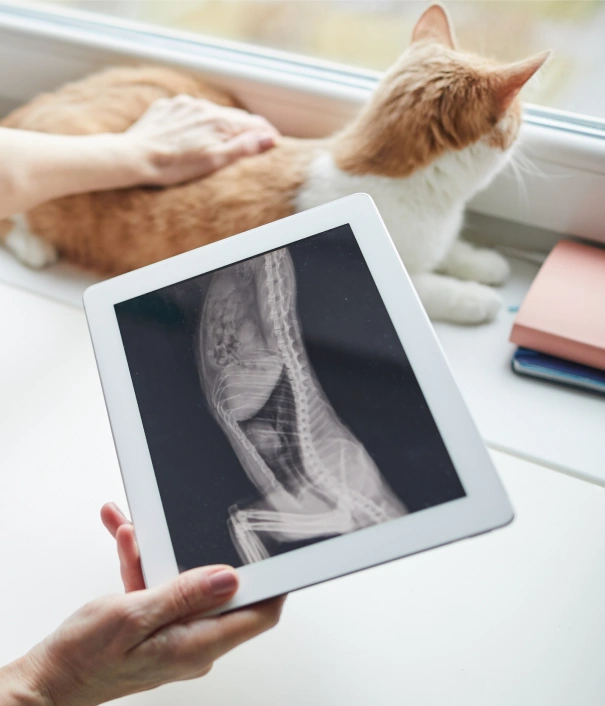
Digital X-rays produce clear, detailed images almost instantly. They are sharper than traditional film, easier to manipulate for contrast and detail, and available for on-screen review within moments of being taken. We use digital radiography to evaluate the bones, chest, and abdomen in a wide range of situations.
Where Digital X-Rays Make the Biggest Difference
- Skeletal evaluation: Fractures, bone density changes, arthritis progression, and joint abnormalities are all clearly visible on X-ray. Cats dealing with limb pain, difficulty jumping, or post-trauma recovery benefit directly from radiographic evaluation.
- Chest and respiratory system: We assess heart size and shape, look for fluid in or around the lungs, and screen for masses or signs of pneumonia. Cats with labored breathing, coughing, or suspected heart disease routinely need chest X-rays as part of the workup.
- Abdominal survey: Organ size, position, and gas patterns are visible on abdominal X-rays. We can identify enlarged organs, detect obstruction in the digestive tract, and locate foreign objects that a cat may have swallowed.
- Urinary tract: Dense stones in the bladder or kidneys often appear on X-rays, helping us determine the extent of a urinary problem before moving toward treatment.
Ultrasound Imaging
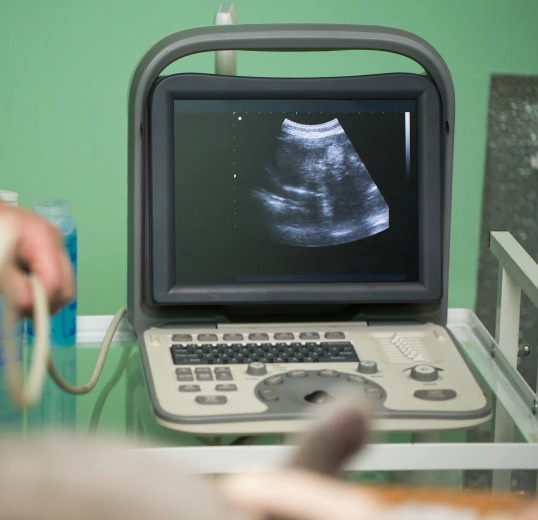
Ultrasound uses sound waves to create real-time images of soft tissues and fluid-filled structures. It gives us a moving picture of organs and allows us to observe them functioning as we examine them. Where X-rays show structure and density, ultrasound shows texture, fluid content, and movement.
When Ultrasound Gives Us the Clearest Picture
- Abdominal organs: We examine the liver, spleen, kidneys, bladder, stomach, and intestinal walls in detail. Ultrasound allows us to measure organ dimensions accurately, assess internal structure, and identify masses, cysts, or thickened walls that X-rays may not clearly show.
- Cardiac evaluation: An echocardiogram uses ultrasound to watch your cat's heart beating in real time. We assess wall thickness, valve function, and the presence of fluid around the heart. Cats are prone to a condition called hypertrophic cardiomyopathy, where the heart walls thicken, and cardiac ultrasound is the most accurate way to diagnose and monitor it.
- Guided sample collection: When we identify a mass or abnormal area on imaging, ultrasound allows us to guide a needle precisely to collect a sample for analysis. Getting an accurate aspirate from a targeted location is far safer and more reliable with real-time visual guidance.
- Intestinal disease evaluation: Inflammatory bowel disease and intestinal lymphoma are among the most common serious conditions in older cats. Ultrasound lets us evaluate intestinal wall layering and thickness in a way no other non-invasive tool can.
How Diagnostics and Preventive Care Work Together
Diagnostic care for cats is most effective when it is part of a broader, ongoing relationship with a veterinary clinic rather than something reserved only for emergencies. Annual or biannual wellness visits that include lab screening allow us to track how your cat's values change over time. A kidney value that was at the high end of normal last year and has crept up this year tells us something important, even if it is technically still within range. Trends matter just as much as individual results. Combining diagnostics with cat preventive care in Independence gives your cat the fullest level of health oversight available.
Your Cat Deserves More than a Surface-Level Checkup
When your cat seems off and you cannot quite pinpoint why, or when a wellness visit uncovers something worth investigating further, having access to thorough diagnostic tools makes all the difference. Our cat diagnostic care in Independence uses in-house lab equipment and advanced imaging to provide a clear picture of your cat's health without unnecessary delays.
Book an appointment with Crysler Animal Hospital and give your cat care that goes beyond what a routine exam can offer. Whether you are starting fresh with diagnostics or following up on a known concern, we will put together the right testing plan and explain every result in clear, straightforward terms. Our team is committed to making sure you understand exactly what is happening with your cat and what the best path forward looks like.
Frequently Asked Questions
