
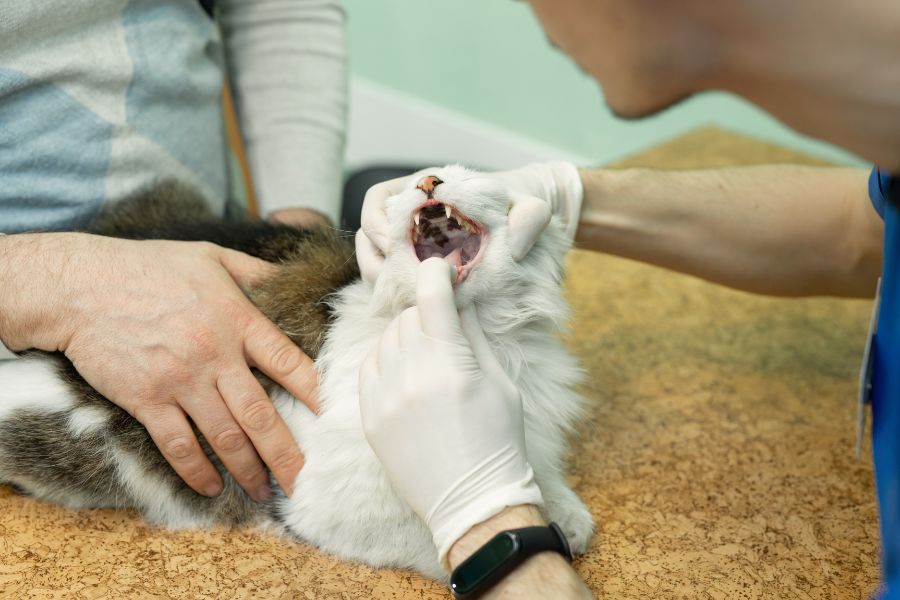
Curious pet parents often ask how many teeth cats have and whether kittens really carry more teeth than adult cats. By the end, you will know what is normal, what needs attention, and how to help your cat stay comfortable at every age, including families in Independence, MO.
The Short Answer
Kittens do not end up with more teeth than adult cats. They start with a temporary set that looks “full,” then lose those baby teeth and replace them with a permanent set. Adults keep fewer teeth overall, yet those teeth are larger and built to last.
Kitten Teeth: The Baby Set
Kittens arrive without visible teeth. Around two to three weeks of age, the first baby teeth appear. These are called deciduous teeth. By eight weeks, most kittens show a complete baby set.
A full kitten set includes 26 teeth. That count covers incisors at the front, sharp canines, and small premolars. These teeth help kittens learn to eat solid food and explore their world. They also teach bite control during play.
Baby teeth sit in smaller jaws, so they can look crowded. That crowded look makes many owners assume kittens have more teeth. The truth is simple: kittens carry fewer teeth than adults, just packed into a tiny mouth.
Adult Cat Teeth: The Permanent Set
Adult cats carry 30 permanent teeth. Those include incisors, canines, premolars, and molars. The extra four teeth appear as molars toward the back of the mouth, teeth that kittens never have.
Permanent teeth start pushing through around three to four months of age. By six months, most cats finish the swap. During this stage, you might find tiny teeth on the floor or notice mild gum redness. Both can be normal.
If you ever wonder how many teeth cats have once they mature, the answer remains consistent at 30 for healthy adults.
Why Kittens Seem to Have “More” Teeth
Perception plays a role. Baby teeth are thin and needle-sharp. They erupt close together. They show clearly when a kitten yawns or plays. Adult teeth sit in a wider jaw, so spacing looks calmer.
Teething also draws attention. Kittens chew more, paw at their mouths, and mouth toys. These behaviors highlight every tooth. Adults chew with confidence and draw less notice.
A Simple Timeline to Expect
Birth to two weeks brings smooth gums. Two to eight weeks brings steady arrival of baby teeth. Three to six months mark the changeover, when baby teeth fall out, and adult teeth rise. Six months and beyond signal a full adult set.
Missing teeth during teething often resolve on their own. Retained baby teeth can happen, especially near the canines. A retained tooth can crowd the adult tooth and trap food. A quick check helps prevent trouble.
Everyday Dental Care That Fits Real Life
Good habits start early. Gentle mouth handling during kittenhood builds comfort. Soft finger brushes or cat-safe brushes work well. Use toothpaste made for cats, never human paste.
Dry food alone does not clean teeth. Treats designed for dental care can help, along with regular brushing. Fresh water supports saliva flow. Chew toys made for cats add enrichment.
Watch for bad breath, red gums, drooling, reduced appetite, or pawing at the mouth. These signs call for an exam. Early care keeps small issues from growing.
Clear Takeaways
Kittens start with 26 baby teeth, and adults settle at 30 permanent teeth. The change happens within the first six months. Crowded baby teeth create the illusion of “more,” while adult molars add the true increase. Daily habits and regular exams protect every smile for your cat.
Conclusion
Cat teeth follow a predictable path from tiny baby points to sturdy adult tools. The count shifts from 26 to 30, with molars joining the lineup. Watch for teething, brush often, and act on warning signs. Small steps preserve comfort and confidence for many happy years ahead.
If you are in Independence, MO, and looking for veterinary dental care, book an appointment with Crysler Animal Hospital. Remember how many teeth cats have, and give your companion the daily care that keeps those teeth working well.
Frequently Asked Questions (FAQs):
1. Do kittens feel pain when losing baby teeth?
A: Most kittens breeze through teething with mild soreness. Increased chewing is common. Soft toys and chilled cloths offer comfort. Call for help if bleeding lasts, swelling grows, or eating drops for more than a day at any point.
2. Can I brush a kitten’s teeth?
A: Yes. Start slow with fingertip brushing and cat-safe paste. Short sessions build trust. Daily brushing brings the best results, though a few times each week still helps reduce buildup and supports healthy gums over time.
3. What happens if a baby tooth does not fall out?
A: A retained baby tooth can crowd adult teeth and trap debris. This raises gum irritation and bad breath. An exam confirms the issue. Removal keeps alignment healthy, improves comfort, and makes cleaning easier.
4. Do all cats reach the same adult tooth count?
A: Most healthy adults have 30 teeth. Genetics, injuries, or past infections can change that number for some pets. Regular checks track changes early and guide care plans that fit your cat’s needs.
5. Is bad breath normal in cats?
A: Persistent odor signals bad breath or gum problems. Occasional fishy smells after meals pass. Ongoing bad breath deserves attention, especially when paired with red gums, drooling, or appetite changes at home.
6. Are dental treats enough on their own?
A: Most healthy adults have 30 teeth. Genetics, injuries, or past infections can change that number for some pets. Regular checks track changes early and guide care plans that fit your cat’s needs.
7. When should my cat get dental checkups?
A: Annual exams suit most adults. Kittens benefit from checks during vaccine visits. Seniors or cats with prior issues may need more frequent reviews. Your care team can tailor a schedule for comfort and prevention.