
The Part of Cat Health Most Owners Miss Entirely
Ask most cat owners when their cat last had a dental exam, and you will get a long pause. Dental health in cats tends to slip through the cracks, not because owners do not care, but because cats are remarkably good at hiding oral pain and carrying on as if nothing is wrong. By the time visible signs appear, the disease is usually well advanced.
At Crysler Animal Hospital, our cat dental care in Independence is designed to change that pattern entirely, giving your cat the kind of thorough, consistent oral care that protects both their mouth and their overall health in the long run.
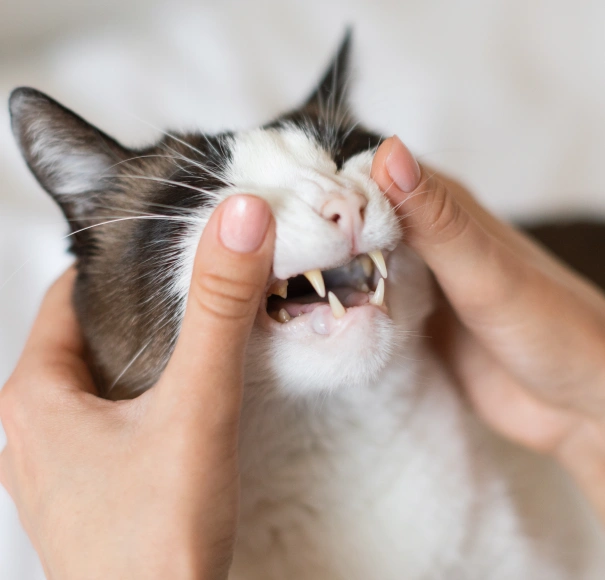

Why Cat Dental Disease Is Easier to Miss than You Think
Cats do not whine when a tooth hurts, nor do they stop eating or deviate from their routine the way a human would with a serious toothache. A cat with painful gum disease still grooms, still purrs, and still finds their favorite sunny spot. Stoic behavior is deeply ingrained in them, making dental disease one of the most under-treated conditions in domestic cats.
The numbers behind this are genuinely striking. Studies estimate that the majority of cats over three years old have some form of dental disease, and most of those cases go completely unnoticed until a vet finds them during a routine exam or a dental procedure. Left untreated, the bacteria involved in gum disease and tooth infections can enter the bloodstream and affect the kidneys, liver, and heart. What starts in the mouth does not always stay there.
Signs That Something May Be Wrong
Cats rarely broadcast pain, but there are signals worth watching for between visits.
- Foul or unusually strong breath: While no cat has minty fresh breath, a genuinely foul or sour odor is almost always a sign of active bacterial infection or decay rather than just normal cat odor.
- Dropping food or chewing on one side only: When eating becomes uncomfortable, cats compensate by favoring one side or letting food fall from their mouth to avoid pressing on a sore spot.
- Pawing at the face or mouth area: Repeated pawing at the mouth is a cat's way of trying to deal with discomfort they cannot otherwise communicate to you.
- Visible tartar or discolored teeth: Yellow or brown buildup along the gumline or at the base of teeth is a clear visual indicator that a cleaning is overdue and that bacteria have been at work for some time.
- Red, swollen, or bleeding gums: Gum inflammation is one of the earliest and most reliable signs of periodontal disease and should never be dismissed as minor or temporary.
- Reduced interest in food: A cat who has always been a good eater but suddenly seems less interested in meals may be experiencing oral pain that makes eating less appealing than before.
Any one of these signs warrants a dental evaluation. Catching problems early means treatment is simpler, faster, and far better for your cat.
What a Complete Cat Dental Procedure Looks Like
Dental care for cats is not a quick polish and a visual check. It is a structured, multi-step procedure that requires anesthesia, imaging, and hands-on treatment to be performed properly. Here is exactly what we do and why each step matters.
Pre-Anesthetic Exam and Bloodwork
Before any dental procedure, we conduct a full physical exam and run bloodwork. We closely monitor kidney and liver function because these organs are responsible for processing anesthetic medications. If values fall outside the safe range, the veterinarian adjusts the anesthetic protocol or addresses the underlying issue before moving forward.
Pre-anesthetic bloodwork is a non-negotiable part of our process. It protects your cat by making sure we go into every procedure knowing exactly what their body can handle.
Full Anesthetic Monitoring
Every cat dental procedure is performed under general anesthesia. Anesthesia is the only way to safely examine the entire mouth, take accurate X-rays, and clean below the gumline without causing your cat stress, pain, or injury.
Throughout the procedure, a dedicated team member continuously monitors your cat. We track heart rate, breathing, blood pressure, oxygen levels, and body temperature from start to finish. Nothing is left unattended, and the monitoring continues until your cat is fully awake and stable.
Digital Dental X Rays
Digital dental X-rays are one of the most important tools we use at every dental appointment. Up to 60 percent of a tooth's total structure sits below the gumline and is completely invisible during a visual exam. Without X-rays, a tooth that appears intact from the surface could have a fractured root, a developing abscess, or significant bone loss around it.
We take a full set of dental radiographs on every patient, every time. Our cat dental services in Independence rely on imaging as a foundation, because treating what you can see without knowing what lies beneath leads to incomplete care and missed problems that continue to worsen.
Ultrasonic Scaling
Once we have a complete picture of your cat's mouth through the exam and X-rays, we use ultrasonic scaling to remove plaque and tartar. The ultrasonic scaler uses high-frequency vibrations combined with a water spray to break apart and flush away hardened tartar deposits from all tooth surfaces, including the periodontal pockets below the gumline, where bacteria cause the most damage to bone and tissue.
Manual instruments follow ultrasonic scaling to ensure every surface is addressed, including tight angles between teeth and the edges of the gumline, which can be difficult to reach with powered tools alone.
Polishing
Polishing comes after scaling and is a step that significantly affects how long the cleaning results last. Scaling removes tartar but leaves microscopic scratches and irregularities on the tooth surface. Bacteria and new plaque adhere to rough surfaces much more readily than smooth ones. Polishing with a fine paste smooths those surfaces and slows the rate at which tartar begins to build back up again.
Extractions and Additional Treatment
When imaging or the exam reveals fractured teeth, root-infected teeth, tooth resorption, or structural compromise beyond what can be managed in place, extraction is often the most appropriate and humane course of action. Keeping a painful or dying tooth does nothing positive for your cat. It leaves them in ongoing discomfort and allows infection to continue spreading to the surrounding tissue and bone.
Our cat dentistry in Independence includes proper pain management before, during, and after any extractions. Cats recover from tooth loss better than most owners expect, and many are noticeably more comfortable, more playful, and more interested in food within just a few days after a painful tooth is removed.

Dental Care at Home Between Visits
Dental care for cats extends beyond the veterinary clinic and into your daily routine at home. What happens between cleanings has a real effect on how quickly tartar returns and how often your cat needs procedures. We work with every cat owner to set up a realistic home care routine that fits their cat's personality and their schedule.
Building a Home Dental Routine
- Tooth brushing: Using a soft-bristled brush and toothpaste formulated specifically for cats, daily brushing is the most effective home method to slow plaque accumulation. We can walk you through how to introduce it gradually so your cat adjusts at their own pace.
- Dental treats and chews: Products that carry the Veterinary Oral Health Council seal of approval have gone through testing and demonstrated genuine effectiveness at reducing plaque and tartar buildup. We help you find options your cat will actually eat.
- Water additives: Odorless and tasteless additives mixed into the water bowl reduce bacterial load in the mouth with almost no extra effort on your part and are well tolerated by most cats.
- Dental diets: Certain prescription or over-the-counter diets are formulated to provide a mechanical scrubbing action as your cat chews, helping reduce tartar on tooth surfaces. We assess whether a dental diet fits alongside your cat's overall nutritional picture.
Not every cat will cooperate with every method. Some cats tolerate brushing beautifully while others require a slower, more gradual approach. We tailor the home care plan to your specific cat rather than handing you a generic checklist and sending you on your way.
Your Cat Has Been Carrying This Long Enough
Cats are patient creatures, but that patience means dental pain often goes unaddressed for months or longer. We use thorough exams, accurate imaging, and careful treatment to identify and address what is actually happening in your cat's mouth, not just what is visible on the surface.
Book an appointment with Crysler Animal Hospital for our cat dental care in Independence that helps protect your beloved feline’s health for years to come. Our team is ready to answer every question you have, walk you through every step, and make sure your cat leaves healthier and more comfortable than when they arrived.
Frequently Asked Questions
